.png)

Custard Apple: A Hidden Superfruit with Medicinal Benefits 🍮🍎🏥🇯🇲

A Forgotten Fruit with Hidden Powers
In the lush, sun-drenched hills of Jamaica, an elderly farmer named Mr. Johnson would wake before dawn to tend his small orchard. Among his cherished trees stood one that many overlooked—the custard apple tree (Annona reticulata), with its heart-shaped fruits hanging heavily from its branches.
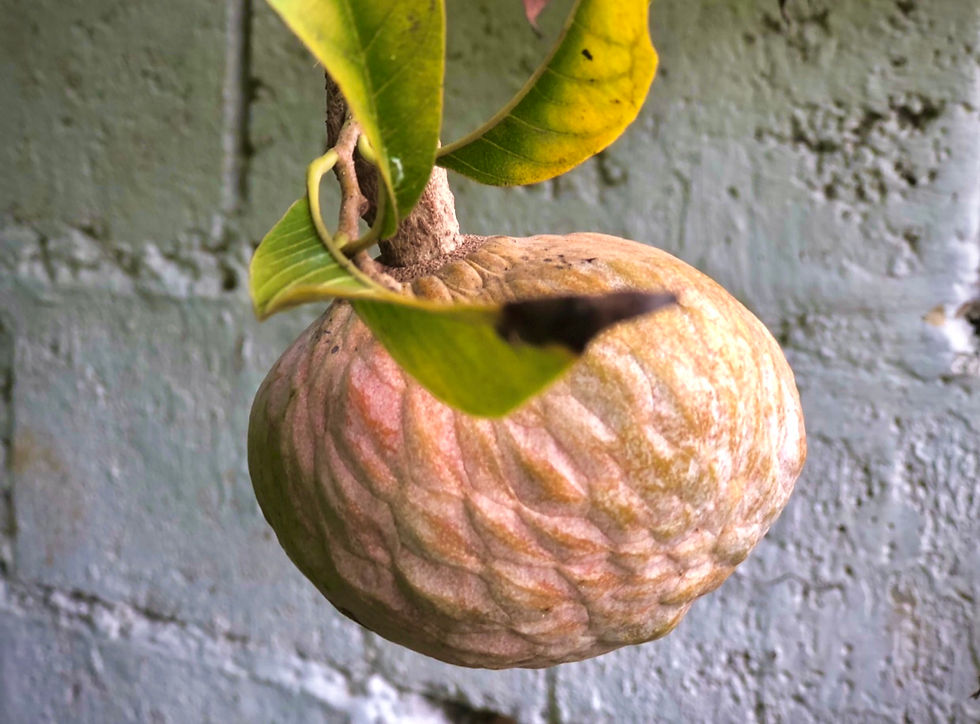
While tourists raved about soursop and sweetsop, Mr. Johnson knew something they didn’t: this unassuming fruit held secrets that modern science was only beginning to uncover.
“Mi granny always seh, eat yuh custard apple, an’ yuh body will thank yuh,” he would say with a knowing smile, slicing into its creamy flesh. It was more than just a treat—it was medicine.

A Superfruit in Disguise
Though it lacks the fame of soursop, Annona reticulata is a nutritional powerhouse packed with vitamins, minerals, and bioactive compounds. Traditionally, Caribbean and South American communities have used it to treat digestive issues, infections, and even high blood pressure. But what if there was more to the story?
Recent scientific studies suggest that custard apple is not just folklore medicine— of course, granny know di right tings dem - but it also has real pharmacological potential. Researchers have uncovered its abilities to fight inflammation, protect the brain, and even combat harmful bacteria.

Science Confirms the Benefits
1. Antioxidant & Anti-Inflammatory Properties
Mr. Johnson often boiled the leaves into a tea to soothe aches and pains. Now, we know why. Studies show that Annona reticulata is rich in acetogenins, powerful compounds with anti-inflammatory and free radical-fighting properties. A 2015 study published in the International Journal of Pharmaceutical Sciences found that the fruit’s root extracts had strong antioxidant activity, helping to reduce oxidative stress that contributes to chronic diseases (Panchal & Shah, 2015).

2. A Natural Antibacterial & Antifungal Agent
Jamaican grandmothers often used custard apple leaves to treat skin infections. Today, research supports this practice. A study in the Asian Journal of Pharmaceutical and Clinical Research revealed that custard apple extracts inhibit the growth of harmful bacteria like E. coli and Staphylococcus aureus (Das et al., 2014). This means it could help fight infections naturally, reducing the need for synthetic antibiotics.

3. Could It Help Prevent Seizures?
One of the most surprising discoveries is that A. reticulata may have anticonvulsant properties. Researchers in a 2021 study published in Future Journal of Pharmaceutical Sciences tested ethanolic extracts of custard apple roots and found that they significantly reduced seizure activity in animal models (Wankhade et al., 2021). This aligns with traditional medicine practices where the plant was used to calm the nervous system.

4. A Potential Cancer Fighter?
Perhaps the most exciting discovery is the fruit’s anticancer potential. Research on A. reticulata leaf extracts suggests that its bioactive compounds slow down the growth of cancer cells (Sathishkumar et al., 2020). While more studies are needed, this opens up exciting possibilities for natural treatments.

More Than Just a Sweet Fruit
Mr. Johnson’s words now carry new weight—not just in tradition, but in science. This fruit, often overlooked in favour of its cousins, is proving to be a hidden superfruit with real health benefits. Whether enjoyed fresh, blended into smoothies, or brewed into tea, custard apple may be one of the most underrated treasures in tropical agriculture.
So, the next time you see this creamy, heart-shaped fruit, remember: it’s not just a treat—it’s medicine from nature itself.

References
• Das, S., Das, T., Dutta, S., & Panda, P. (2014). Antimicrobial activity of Annona reticulata extracts against bacterial and fungal pathogens. Asian Journal of Pharmaceutical and Clinical Research, 7(4), 171-174.
• Panchal, S. S., & Shah, P. H. (2015). Evaluation of antioxidant activity of Annona reticulata root extract. International Journal of Pharmaceutical Sciences, 7(6), 243-249.
• Sathishkumar, R., Lakshmi, P. T. V., & Annamalai, A. (2020). Phytochemical analysis of Annona reticulata extract and an in vitro study on its anti-proliferative effects. Journal of Emerging Investigators.
• Wankhade, R., Sakhare, M., & Vetal, S. (2021). Evaluation of anticonvulsant activity of Annona reticulata root extract in experimental models. Future Journal of Pharmaceutical Sciences, 7(19), 1-9.


Comments